What Is an Electrical Panel? A Novice's Guide
@donovanwmsd992
Most individuals stroll past the gray metal door in their corridor or garage without a reservation. That cabinet is not just a box of switches. It is the main nervous system of a home's power, the place where electrical power gets portioned out, secured, and shut off when something goes wrong. If you wish to understand your house, it helps to comprehend the electrical panel.
I have opened numerous panels in basements and utility spaces, and the same questions constantly show up: What am I looking at? How much power do I have? Why does that breaker keep tripping? Can I include a car battery charger? The responses are straightforward once you comprehend the parts, the flow of power, and the limits of the system.
What an Electrical Panel Actually Does
Utility power reaches your home through service conductors that link to a meter, then to the primary service disconnect, which is typically integrated into the electrical panel. Inside the cabinet are breakers that segment that inbound power into circuits, each with an appointed function: kitchen area outlets, a furnace, lights, a clothes dryer, maybe a hot tub.
The electrical panel carries out 3 tasks at the same time. It houses the main detach so you can kill power to the structure in an emergency. It restricts present to safe levels using breakers that trip under fault or overload conditions. It arranges circuitry so each circuit can be separated, identified, and serviced without disturbing the remainder of the home.
When individuals call it a breaker box or fuse box, they are referring to the very same idea across various ages. Older homes utilized merges that melt when overwhelmed. Modern electrical panels use breaker, which trip and can be reset. Both safeguard conductors from overheating, however breakers add convenience and better diagnostics.
The Path of Power, Start to Finish
Power begins at the transformer on the street. For normal North American homes, 2 hot legs and one neutral show up from the utility in a setup called split-phase 120/240 volts. Those conductors go through the meter, then into your electrical panel's main lugs or primary breaker.
From the primary breaker, the panel's two vertical bus bars disperse power. Single-pole breakers clip onto one bus bar to supply 120-volt circuits, like lighting and basic receptacles. Double-pole breakers cover both bars to provide 240-volt circuits, such as a range, water heater, or EV battery charger. The neutral bar returns current from 120-volt loads, and a different ground bar ties all devices grounding conductors together and bonds to the grounding electrode system, which connects to earth through ground rods or other electrodes.
That split-phase arrangement discusses some secrets. If half your house goes dark, however some lights still work, one of the hot legs may be out due to an utility issue or a failing primary breaker. If a double-pole breaker journeys when a big load starts, it might be responding to imbalance or a brief on one side. Comprehending the 2 buses and how breakers link to them assists you fix with less guesswork.
Anatomy of an Electrical Panel
Open the panel door and you will see breakers and a labeling directory. Get rid of the dead front cover and you will see more, however that is work for qualified hands just. The significant components are:
-
Main breaker. The large switch that shuts off power to the whole panel. Common scores are 100 amps for older homes, 150 or 200 amps for contemporary builds, and 225 to 400 amps for large or all-electric homes.
-
Bus bars. Metal bars that bring the 2 hot legs down the panel. Breakers snap into these bars. Neutral and ground bars run along the sides for returning present and devices grounding.
-
Branch circuit breakers. Single-pole or double-pole devices that secure private circuits. Popular sizes consist of 15 and 20 amps for basic circuits, and 30, 40, 50, or 60 amps for devoted loads.
-
Load center enclosure. The metal cabinet with knockouts for cable televisions and channels, a hinged door, and a removable interior cover.
-
Labels and directory sites. A clear, specific directory site is better than lots of people realize. It conserves time and minimizes errors when you require to turn off a circuit quickly.
Behind all this are conductors sized to match their breakers. Copper or aluminum wires feed in through knockouts with connectors, then land under lugs or terminals. The neatness of those terminations informs you something about the quality of the installation. Clean bends, totally seated insulation, torque-marked lugs, and tidy bundling mean somebody cared and followed finest practices.
Telling a Main Panel from a Subpanel
A main panel includes the service detach and bonds neutral to ground. A subpanel does not have the service detach and should keep neutral isolated from ground. That bond point matters. If neutral and ground are tied together in multiple panels, roaming neutral current can travel on grounding conductors and metal avenue, which makes shock most likely and develops nuisance problems with delicate electronics.
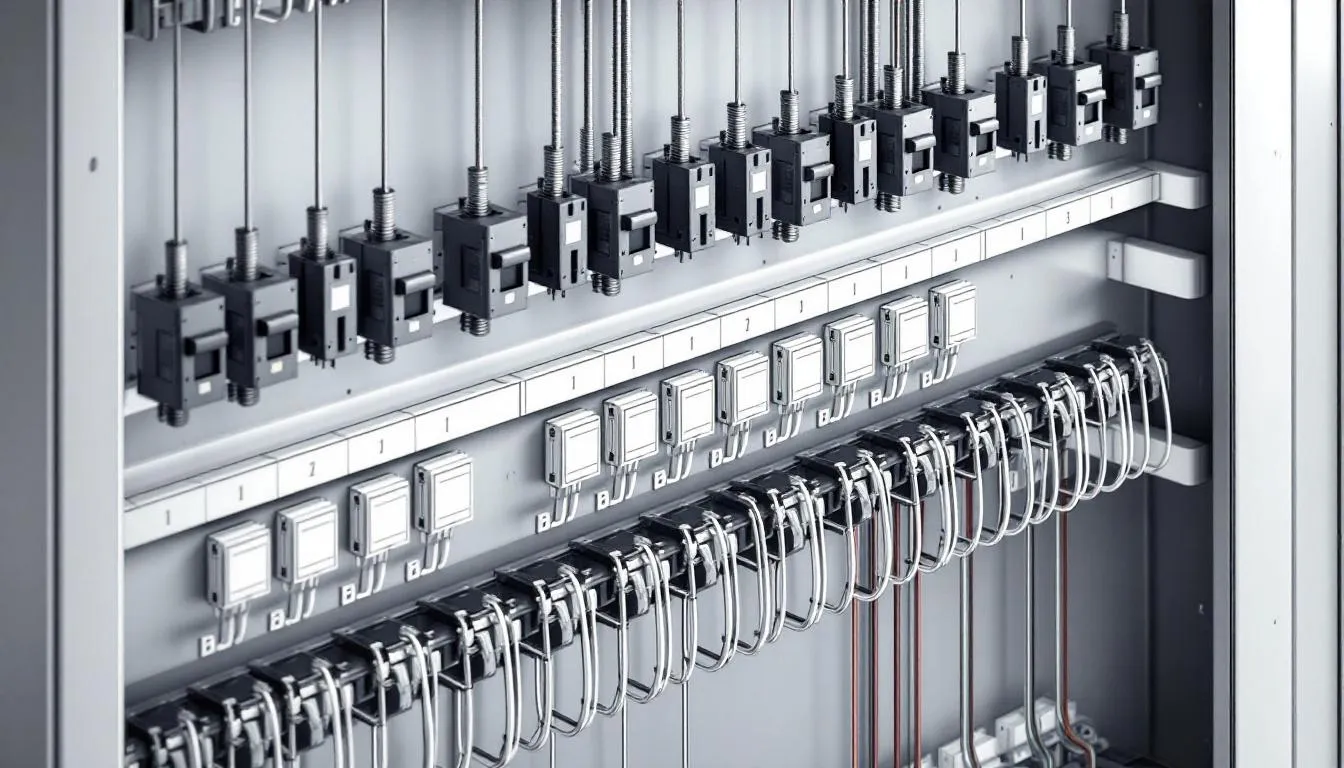
Subpanels let you broaden circuits in a separated garage, a finished attic, or an addition without packing the primary cabinet to the gills. They get fed by a two-pole breaker in the primary panel, sized to the feeder conductors and the subpanel's rating. Inside the subpanel, you install a separated neutral bar and a different ground bar. Many modern load centers are convertible, so the difference remains in how they are set up and bonded.
Typical Panel Sizes and What They Mean
The panel's ranking sets the maximum continuous existing the service can bring safely. A 100-amp panel was common years ago when homes had smaller loads. Today, most brand-new detached homes go for 200 amps. That accommodates electrical cooking, central air conditioning, a clothes dryer, a hot water heater, and room for future additions. Townhouses and homes might have 100 or 125 amps if they use gas for significant appliances.
I frequently see stress and anxiety around the number on the main breaker. A 200-amp panel does not draw 200 amps all day. It defines the limit. A lot of homes typical 5 to 20 amps over a day and spike greater when big devices cycle. If you include an EV battery charger or heatpump, the concern ends up being load calculation, not just panel ampacity. You take a look at the real linked loads, use need elements, and see whether the service and panel have the headroom. Often the answer is yes with a load management device that throttles a new load when others are active. Sometimes you require a complete upgrade.
When a Panel Deserves Replacing
I do not recommend changing a working, safe panel just because it looks old. However certain conditions cross the line into hazardous. Worn away bus bars, melted insulation, double-tapped breakers where the terminal is not rated for two conductors, and recurring annoyance tripping all signal problem. If the listing label has actually been eliminated or is unreadable, that is also an issue due to the fact that the label defines what breakers are approved.
A couple of tradition brands have actually known safety concerns. Panels that use outdated breaker designs or have documented failure rates under fault conditions need to be examined and most likely changed. The free gift is frequently the brand name and design inside the door. When I see original equipment from the 1960s or 70s with that pedigree, I raise the subject with the homeowner and explain the threat clearly, including what screening has actually revealed and why contemporary devices is more reliable.
A panel upgrade is likewise a useful option when you keep running out of breaker areas. Tandem breakers can legally increase circuit count in some panels, however only where the label enables it. I choose to plan for growth with a 40-space panel or a subpanel rather of squeezing every last slot.
GFCI, AFCI, and Dual-Function Protection
Modern codes call for more than basic overcurrent security. Ground-fault circuit interrupters discover leak present and journey quick to avoid shocks. Arc-fault circuit interrupters notice arcing faults that can result in fires, especially in harmed cables, pinched wires, or loose connections. Dual-function breakers combine both.
I have replaced enough blistered outlets behind beds and under desks to appreciate what arc-fault devices prevent. Yes, they can be picky if misapplied. A vacuum or treadmill can journey a marginal circuit. The repair is normally to remedy the circuitry, not to get rid of the defense. Shared neutrals, bootleg grounds, and sloppy pigtails offer arc-fault gadgets indigestion. Tidy up the terminations and those annoyance trips dry up.
Where protection belongs depends upon regional code cycles and whether you are renovating. GFCI is expected in bathrooms, cooking areas, garages, outdoors, and laundry areas. AFCI is typical in the majority of habitable spaces and hallways. If your panel supports plug-on neutral breakers, installation is cleaner, given that the breaker plugs into the neutral bar straight and you prevent a pigtail cluttering the rain gutter space.
How to Read Your Panel Like a Pro
Start with the label inside the door. It notes the panel model, rating, optimum breaker size, and which breaker series are authorized. That tail end matters since not every breaker from the same brand name works. Mixing brands or using an unlisted breaker can produce poor contact on the bus, leading to heat and failure.
Scan the directory. If it states "lights" 3 times and "outlets" 5 times, take an hour and trace circuits. Plug a radio or a small lamp into a receptacle, switch off breakers one at a time, and document what really turns off. If you can not find a breaker for a circuit, search for a subpanel that serves that location. An exact directory assists throughout emergencies and lowers the time a professional will bill to troubleshoot.
Look for indications of heat or damage. A breaker with a discolored handle or a breaker that feels loose on the bus must be replaced. Wires should be totally placed under lugs with no copper showing beyond the clamp. Various wire assesses must not share the same terminal unless the gadget is ranked for numerous conductors and sizes. Aluminum conductors need antioxidant compound and correct torque.
Check grounding and bonding. electrical panel replacement In the main panel, neutral and ground are bonded. In subpanels, they are separated. If you see a green bonding screw installed in a subpanel, that is typically wrong and should be gotten rid of. If you see bootleg grounds, where a jumper ties neutral to ground on a receptacle, plan to repair the circuit properly.
Why Breakers Journey, and What That Tells You
A breaker journeys for 3 primary factors: overload, brief circuit, or ground fault. Overload suggests the sum of loads on that circuit exceeded its score for long enough to heat the breaker's bimetal component. Hair clothes dryers and area heaters plugged into the same 15-amp circuit will do that. A brief circuit is a direct connection between hot and neutral or in between hot and ground, and it journeys quickly with a sharp pop. A ground fault is a leak path from hot to ground, frequently through water or the body, and a GFCI will catch it at whole house electrical upgrades really low currents.
On the task, I ask two questions: what altered, and does the breaker reset and hold? If a breaker trips after you included a treadmill in the bedroom, that is a load problem. If the breaker will not reset, you likely have a fault that continues and needs troubleshooting with the circuit de-energized. An arc-fault trip in some cases indicates a loose double-crossed receptacle connection. Move the conductors to the screw terminals and the intermittent arcing stops.
If a breaker journeys repeatedly without an apparent cause, feel it after it cools off. Warm is normal under load. Hot to the touch suggests a failing breaker or poor bus contact. In any case, do not keep resetting a misbehaving breaker without examining. Breakers are security devices, not suggestions.
Planning for New Loads: EVs, Heat Pumps, Induction Ranges
The electrical panel is usually the bottleneck when people amaze appliances. A 50-amp EV charger, a 40- or 50-amp induction range, and a 30- or 40-amp heatpump air handler can chew through capability on a little service. The best approach is a load calculation. You list fixed home appliances, apply need aspects for cooking and general loads, add the largest heating or cooling load, and compare to the service rating.
If the numbers reveal limited headroom, you have choices. One is a service upgrade, moving from 100 to 200 amps with a new meter base, service conductors, and main panel. Another is a smart panel or a load management device that briefly sheds a water heater or clothes dryer while the EV charges. I have set up a number of setups where a 50-amp EV charger is enabled to run only when the oven is off. The house owner never ever notifications, and the service never ever exceeds its limit.
Sometimes, the most affordable service is to pick a smaller EV charging rate. Dropping from 50 amps to 32 amps decreases charge speed however fits within the available capacity. Or you might run a 20-amp 240-volt circuit and utilize a portable EVSE. A nuanced conversation about practices and concerns normally discovers a course without overspending.
Safety Basics for Homeowners
You can do a number of jobs around an electrical panel safely without opening it. Keep the location in front of the panel clear for at least three feet so you can access it quickly. Keep the directory accurate and readable. Listen for buzzing or sizzling, which can suggest a loose connection. If the panel remains in a wet area, control humidity and fix leakages. Rust on the enclosure frequently indicates wetness inside, which shortens the life of breakers and bus bars.
If you need to replace a breaker or add a circuit, treat that as licensed work unless you are truly comfortable and certified. Even with the primary breaker off, the service conductors feeding the primary lugs are live. That is not a location to learn on the fly. Also, lots of jurisdictions need permits for electrical work, and your insurance company anticipates that upgrades are inspected.
There is one property owner job I recommend: work out the primary breaker once a year, if the manufacturer allows it. A fast off and on clears dust and guarantees it is not frozen. Do it in daylight with a flashlight ready, and shut down delicate electronics first. If the main feels mushy, binds, or does not reset cleanly, call a pro.
Common Myths and Misconceptions
I often hear that a 200-amp panel constantly provides more power to circuits than a 100-amp panel. The truth is subtle. The specific circuits are still secured at their breaker rankings, 15, 20, 30 amps, and so on. The bigger panel merely permits more concurrent load across the home without going beyond the service limit.
Another misconception is that an old panel is inherently risky. I have actually opened 40-year-old panels that look much better than some that are five years old. Good craftsmanship and a dry environment matter more than age alone. That said, outdated or recalled devices should have examination, and adding contemporary protective gadgets to an older system typically yields a real safety upgrade.
Finally, people assume all breakers from a provided brand name are interchangeable, or that a "universal" breaker will fit any panel. Fit is not the full story. Contact pressure, clip geometry, and noting all matter. I have seen bus stabs burned by an incompatible breaker that appeared to snap in fine. Usage breakers that the label lists for that cabinet.
A Short Word on Three-Phase and Commercial Panels
Homes usually have split-phase service. Some little stores and multifamily buildings have three-phase power. The panel will look similar, but rather of two hot legs you will have three phases on the bus. Three-phase panels allow more efficient motor loads and balanced power for industrial equipment. If you have a removed workshop with a three-phase panel, do not assume that residential electrical wiring rules apply in the very same way. Protection schemes, transformer setups, and conductor colors can vary. Labeling and balance matter a lot more in those settings.
The Cost Landscape
Panel work ranges widely in cost depending upon area, allows, service upgrades, and complexity. Swapping a like-for-like load center with small rewiring might run a few hundred to a couple thousand dollars. A full service upgrade, consisting of meter base, brand-new service conductors, and coordination with the utility, can land in the mid four figures, in some cases higher if trenching or mast work is required.
The covert cost is many times. Energies schedule disconnects and reconnects on their timetable. Permits and assessments add steps. A seasoned electrical expert will stage the job to minimize downtime. I have actually done upgrades where the power was out for just 4 hours since materials were prepped and labeling was done in advance. Excellent preparation pays for itself.
Signs of a Well-Installed Panel
Walk up to a panel and try to find clues. The enclosure is square to the wall and flush. Knockouts are tidy, with listed ports for each cable. Wires are nicely routed without any sharp bends and adequate slack to service a breaker without yanking. Breakers are all the proper design for the panel, and the directory site reads like a map instead of a riddle. Neutrals are one per hole on the bar unless the label allows two and the conductor sizes match. Ground and neutral are bonded only where they must be.
I also try to find torque marks on lugs. A lot of modern devices specifies torque values for terminations. A little paint swipe reveals the installer used a torque screwdriver or wrench. It is a little detail that avoids numerous problems.
If You Are Structure or Renovating
Think a decade ahead. If you can pick a panel, select one with more areas than you require, 30 to 42 is a sweet spot for many homes, and consider a design that supports plug-on neutral and smart breakers. Locate it where you can service it quickly. Avoid closets, bathrooms, and tight corners that restrict the required working clearance. If you expect solar, batteries, or a standby generator, plan for interconnection with a bus ranked to deal with backfeed and equipment that supports the required breakers and disconnects.
Coordinate the huge loads early. An induction range, heat pump water heater, and EV charging do not need to clash if you plan circuits with diversity and, where useful, load management. Running channel to the garage during a remodel costs little and keeps alternatives open.
Troubleshooting Stories That Teach
A townhouse had periodic power drops on half the circuits. We found a loose neutral lug in the panel, which developed flicker and odd voltage swings on 120-volt circuits. Tightening up the lug repaired the immediate problem, but we also checked every neutral connection in the branch circuits. A drifting neutral can prepare electronic devices. That case taught the owner why neutrals are not passive wires you can ignore.
Another home had a basement panel that tripped a dual-function breaker every couple of days. The culprit was a staple driven too tight into a cable television as it travelled through a stud. The staple had nicked the insulation, creating a barely-there arc when humidity increased. Replacing the harmed area and re-stapling properly resolved it. The lesson: the breaker was doing its task, and careful physical installation matters as much as sizing.
A garage subpanel kept tripping when both the air compressor and the table saw ran. The feeder was appropriate, but the subpanel had its neutral bonded to the case, and neutral current was returning on the devices premises. Correcting the bonding and rearranging loads by stage balanced the system and ended the annoyance journeys. Seclusion in subpanels is not a scholastic guideline, it alters how current flows.
Glossary of Beneficial Terms
-
Service conductors: Wires that bring power from the utility to your meter and primary panel.
-
Main breaker: The main detach that turns off power to the panel.
-
Bus bar: Metal strip that disperses power to breakers, likewise the location where neutrals and grounds end on their respective bars.
-
Branch circuit: A circuit that runs from a breaker to outlets, lights, or equipment.
-
GFCI/ AFCI: Specialty defense that trips on ground fault or arcing conditions.
-
Subpanel: A secondary panel fed from the main, with separated neutral and ground.
These definitions might feel obvious after you have actually hung out around panels. For newbies, they anchor the vocabulary, that makes every future conversation with an electrician much faster and clearer.
The Bottom Line for Homeowners
Your electrical panel sets the limits for how your home utilizes electrical energy. If it is sized right, set up cleanly, and secured with the right gadgets, you acquire security and versatility without thinking about it day to day. Keep the space clear, keep the labels truthful, and do not disregard recurring journeys or heat. When you prepare upgrades, treat the panel as infrastructure, not an afterthought. A little insight now will conserve you money and headaches when you include that 2nd EV, switch to an induction variety, or end up the basement.
If you take absolutely nothing else away, remember three practical practices. Know where your primary breaker is and how to run it. Keep the directory accurate. And if anything about the panel looks or sounds wrong, get it examined. The electrical panel is quiet the majority of the time, however when it speaks, it typically has something important to say.